
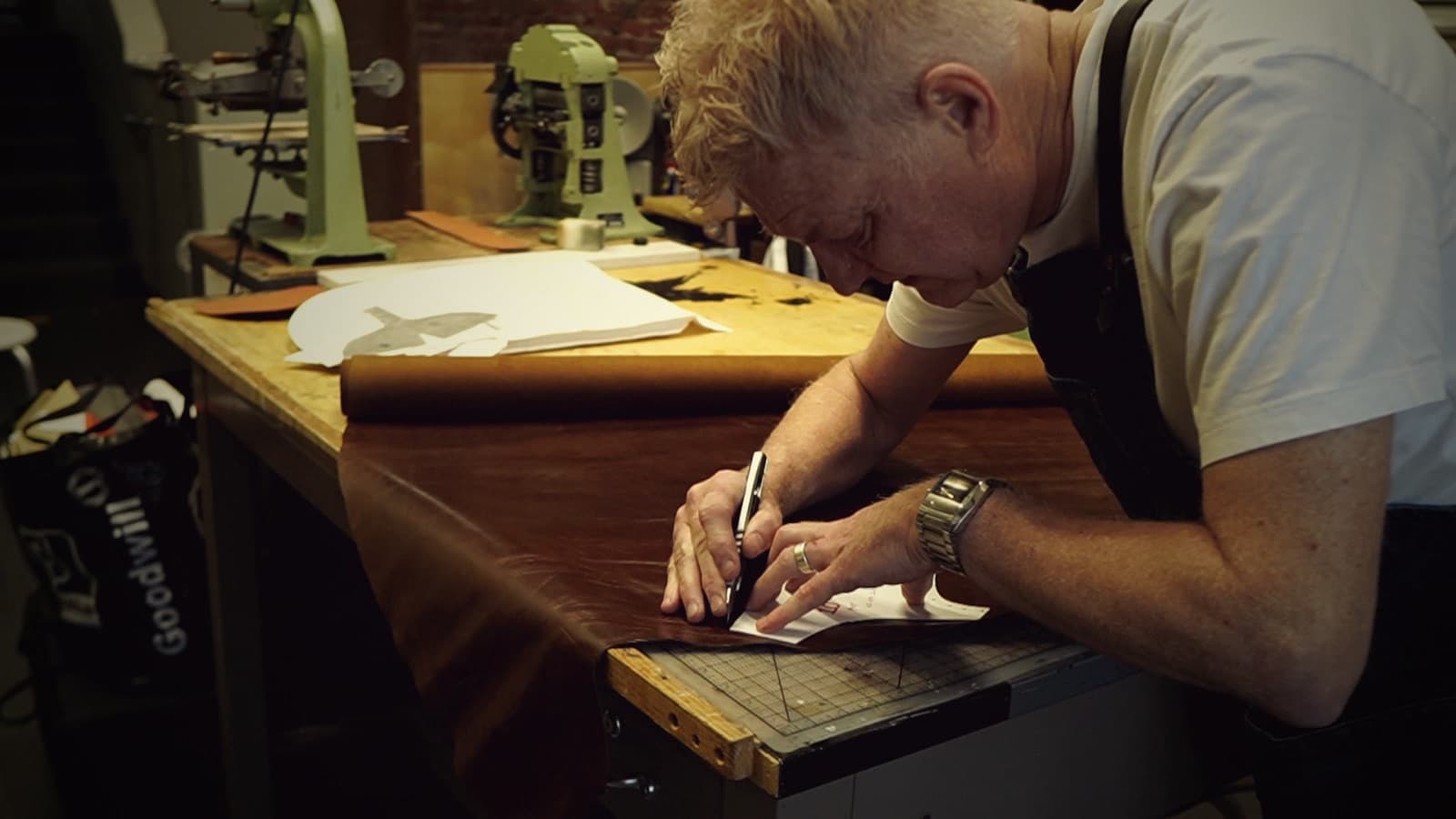
The short version of how to become a shoemaker: most people today start by learning leather fundamentals, then take a hands-on shoemaking intensive (from a two-day class to a twenty-week program) to build a first complete pair, and from there either apprentice at a working shop or set up a bench of their own. There is no U.S. shoemaking degree, though hands-on programs and apprenticeships exist; the craft is still learned by making shoes, one pair at a time.
What the shoemaking craft actually involves
The word "shoemaker" covers three fairly different working lives, and the terminology is worth getting straight before you choose a path. A cordwainer builds new footwear from raw leather, while a cobbler repairs and resoles it. The distinction dates back centuries: a 1395 London ordinance formally separated cobblers, who worked in used leather, from cordwainers, who worked in new hides. If the vocabulary is new to you, the cordwainer explainer walks through it.
Bespoke making sits at one end of the craft. A cordwainer measures a foot, carves or adjusts a last, cuts a pattern, and hand-welts a pair over days or weeks. Mid-market bespoke boots run $1,500 to $3,500, as the artisan trade salary breakdown covers, and the verified top tier climbs well past that; bespoke work from top makers can run upwards of $10,000 a pair. Repair and cobbling sit at the other end, where a bench cobbler resoles, restitches, and refinishes shoes customers already own. Between the two is factory and atelier production, where makers run one station on a bench line at a company like Red Wing or a luxury house like Hermès.
The measured employment base for this trade is small. The shoe and leather workers and repairers category (O*NET 51-6041.00) counts roughly 9,500 workers, with a median wage of $37,800 and a 10th-to-90th-percentile range of $28,210 to $52,550 (O*NET). Note: that figure is the employed-production-work median, not what an independent bespoke maker charging $2,000 a pair takes home, and the artisan trade salary breakdown sets it beside the wider trades. Employment is projected to decline slightly through 2034, yet the trade still generates about 900 openings a decade, because workers retire faster than newcomers arrive (O*NET).
That scarcity shows up most sharply in repair. U.S. shoe-repair shops have fallen from roughly 120,000 in 1928 to under 3,500 today, a decline the artisan trades explainer documents in full. With fewer shops but steady demand, shop owners are actively looking for people to train; the Shoe Service Institute of America says repairers across the nation are seeking help to meet demand (SSIA).
Skills and tools you need to become a shoemaker
Before lasts and welts, the foundation is leather handling: cutting cleanly, saddle-stitching a straight line, and finishing an edge. Working leatherworkers repeat the same point about equipment — the mileage matters far more than the gear, and straight stitching comes from hours of practice rather than better tools.
A beginner's hand kit is short. Most tool guides name four essentials: a shoemaker's knife, an awl set, lasting pliers (which grip and stretch leather over a last and double as a nailing hammer), and a cobbler's measuring tape up to 24 inches (Shoemakers Academy). A common piece of beginner guidance is to skip the full kit and start with a low-risk build like sandals or moccasins, since sandals are among the few shoe types you can make without a steel-plated last (ShoemakingCoursesOnline).
Going full-time raises the number quickly. Dave Corey, a self-taught bootmaker who founded Old Speed Manufacturing, lists a working starter bench at a used post-bed sewing machine around $800, a sole press from $500, a heat gun near $30, an optional clicking machine around $500, plus hand tools (Stridewise). Machine welting is the expensive fork in the road, since an outsole stitcher runs $1,000 to $2,500 while a Goodyear welting machine can top $10,000. Corey's all-in estimate: "If I were starting with nothing, I'd probably want to have about $15,000" (Stridewise).
A step-by-step pathway to become a shoemaker
There is no single ladder into this craft, but the sequence below reflects how most working makers actually broke in.
1. Build leather fundamentals. Shoemaking rests on leatherwork, and structured leathercraft programs — San Francisco's Heirloom Leathercraft among them — teach the pattern-making, saddle-stitching, and edge finishing the craft rests on. Note: programs like these build bags and structured accessories rather than footwear, so treat them as groundwork rather than shoe construction itself.
2. Take a shoemaking intensive and finish your first pair. The fastest way to learn whether the craft suits you is to build one complete pair under supervision. Options run from a two-hour taster to a twenty-week immersion, and what you finish with scales directly with the program's length.
| Program | Location | Cost | Time | You finish with |
|---|---|---|---|---|
| Intro to Shoe Making | Brooklyn / online | $85–$100 | 2 hours | An overview, no build |
| Beginning Shoemaking | Chicago | $950 | 2 days | A first hands-on build |
| Intro to Sandal Making | New Orleans | $1,100 | 3 days | A made-to-measure sandal |
| Cordwainer Shop workshop | Canterbury, NH | from $1,800 | 4 days | A full custom pair |
| Intro to the Lasted Shoe | New Orleans | $1,875 | 5 days | A lace-up derby or flat |
| Evening shoemaking | London | £535/term (~£1,600 total) | 10–30 weeks | A bespoke pair over ~3 terms |
| Bespoke Shoemaking (Stefano Bemer) | Florence | €13,800 | 20 weeks | A personal capsule collection |
How much does it cost? A single hands-on U.S. class that sends you home with a finished pair runs roughly $950 to $1,900. A full European bespoke track, the kind that prepares you to work as a maker, runs into the five figures.
How long does it take? A wearable first pair takes a four- or five-day intensive. Fluency takes years.
3. Choose a deeper training route. Four routes lead further, and serious makers often combine them.
On the private-program route, U.S. options are real but abbreviated (the Chicago School of Shoemaking, the Shoe College in New Orleans, and the Cordwainer Shop in New Hampshire), while the fullest immersions are abroad: Carréducker in London and the twenty-week Stefano Bemer course in Florence, which is the only one that culminates in a personal design collection positioned for hiring as a maker (Schola Academy). Marcell Mrsan, a sixth-generation leatherworker in Mount Joy, Pennsylvania who holds a Hungarian Master Shoemaker certificate, is also the appointed U.S. instructor for Caligola4 CAD pattern software (Marcell Mrsan), a reminder that digital design tools now sit comfortably beside hand lasting on a modern shoemaker's bench.
On the apprenticeship route, there are no longer any formal shoe-repair trade schools in the U.S. (working repairers still train newcomers directly); the SSIA states plainly that it "is not aware of any shoe repair schools in North America" and recommends finding a working repairer willing to train you. The trade (SOC 51-6041.00) is a registered federal apprenticeship occupation, so shops can run paid, mentored programs (Apprenticeship.gov). One prominent Oklahoma bootmaker's entry followed this shape exactly: three months of paid training under bootmaker Ray Dorwart, then an unpaid apprenticeship of a year and a half before opening her own shop (Stitchdown).
On the luxury-house route, ateliers train from zero. Hermès recruits more than 200 leatherworkers a year through its own accredited École Hermès des savoir-faire, where beginners earn the French CAP Maroquinerie diploma and can go on to any of the house's 19 leather workshops (World Footwear). At that level, mastering the most demanding skins can take up to six years.
On the self-teaching route, makers like Dave Corey stacked short workshops, online instruction, and relentless practice into a full-time trade. As bespoke shoemaker Justin FitzPatrick puts it, you do not learn shoemaking overnight, and the process rewards discipline above all (The Shoe Snob).
4. Log the pairs. Skill matures with output, and the counts add up slowly. A rule of thumb passed between bootmakers holds that no one truly knows the craft until they have made about 500 pairs, a threshold that can take a decade of steady work to reach (Stitchdown).
Building a portfolio and landing your first bench job
For a shoemaker, the portfolio is the shoes. A currently posted cobbling apprenticeship at Awl Together Leather asks applicants for a resume, two references, and a portfolio of 2 to 10 completed projects, and it welcomes candidates with no shoe-repair experience as long as they bring transferable hands-on skill and adequate hand strength (Awl Together Leather). The shop runs a three-month structured training period on machinery, gluing, and assembly before tip income (averaging $2 to $3 an hour) begins.
Production benches are the other common on-ramp. Red Wing's own hiring materials confirm that entry-level roles in cutting, sewing, and sole attaching require no previous experience and are trained on the job, though the environment is physically demanding (Red Wing). Repair work is institutionalizing too: Cobbler Concierge built a national mail-in model by routing volume to the Rocco family, fourth-generation cobblers, rather than replacing them (Forbes), and Nordstrom runs in-store cobbler services at its flagship stores (Nordstrom). Both point to steady paid bench work for trained hands.
Where the shoemaking jobs are
The clearest way to see the range is to look at who hires, and three tiers hold most of the paid work. Production makers like Red Wing train beginners into station work. Independent repair benches, from neighborhood shops to Awl Together, take on apprentices directly. Luxury ateliers train from nothing: at Hermès, beginners earn a government-recognized diploma. "We have our own school, so we can give a diploma, which is recognized by the French Minister of Education," says Guillaume de Seynes, the house's manufacturing chief (Marie Claire).
The underlying leather handling transfers across that whole ladder. For a sense of what mastery of it looks like up close, our sister show The Trades Show sat down with Hermès-trained leather artisan Béatrice Amblard, who now trains new leatherworkers from her San Francisco atelier — her craft is fine leather goods rather than footwear, but the cutting, stitching, and edge finishing she teaches is the same foundation a bespoke shoemaker builds on.
Find the work
The Corral tracks the openings, apprenticeships, and grants that let a shoemaking path actually pay. Browse current leatherwork and shoemaking listings on the jobs board, inquire about open apprenticeships at working shops, and check residencies, fellowships, and grants that fund early makers. The artisan map shows who is working near you. Set a job alert to hear the moment a bench role opens.
Frequently asked questions
How long does it take to become a shoemaker?
You can make a wearable first pair in a four- or five-day intensive, but real competence takes years of steady output. A traditional rule of thumb among bootmakers puts real command of the craft at about 500 pairs, roughly a decade of steady work. A structured luxury path, such as mastering Hermès's hardest skins, can run up to six years.
How much does it cost to learn shoemaking?
A U.S. hands-on class that produces a finished pair runs roughly $950 to $1,900. Longer European bespoke programs cost far more, up to €13,800 for the twenty-week Stefano Bemer course in Florence. Setting up your own working bench adds to that; self-taught bootmaker Dave Corey estimates about $15,000 to start from nothing with lasts, machines, and materials.
Do you need a degree or license to become a cobbler?
No degree or license is required to become a cobbler or shoemaker in the United States. No formal shoe-repair trade schools remain in the U.S., so the Shoe Service Institute of America recommends finding a working repairer willing to train you. The trade is also a registered federal apprenticeship occupation, so shops can run paid, mentored programs.
Can you make a living as a handmade shoemaker?
Yes, though the range is wide. Employed shoe and leather workers earn a median near $37,800, while independent bespoke makers set their own prices: mid-market boots run $1,500 to $3,500, and bespoke work from top makers can run upwards of $10,000 a pair. Repair benches offer steadier day-to-day income than one-off custom commissions.