
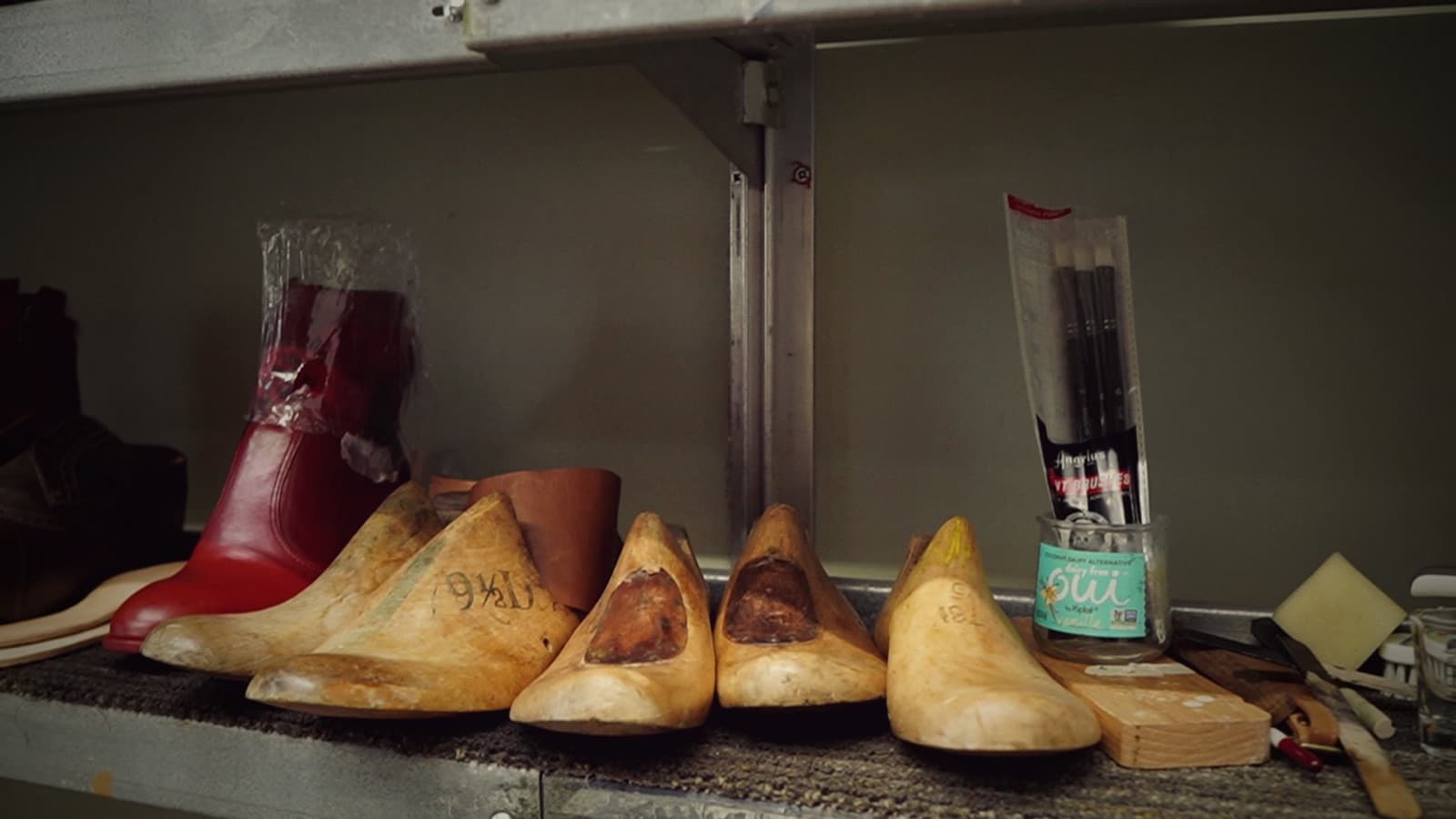
A cordwainer is a shoemaker who builds new footwear from fine, new leather, working a shoe from the last to the finished welt. The word separates that craft from a cobbler, who repairs and mends existing shoes, and from shoemaker, the neutral umbrella term for anyone in the trade. The distinction traces to a 1395 London ordinance that split new-leather work from repair.
Most of the time the three words get used interchangeably, and that causes little harm at the shoe rack. For anyone hiring a maker, training in the craft, or listing their own work, though, the lines are precise and old. The trade still sorts them along a boundary medieval London drew, and it shapes who a workshop hires and what an apprentice trains to build.
Cobbler vs Cordwainer vs Shoemaker at a Glance
| Term | What they make or repair | Where the work happens | How you enter |
|---|---|---|---|
| Cobbler | Repairs and mends existing shoes; resoling, reheeling, restitching | Repair shops and service counters | Apprenticeship with a working repairer, typically one to three years |
| Cordwainer | Builds new shoes from new, fine leather, start to finish | Bespoke workshops and small ateliers | Apprenticeship, bench training, or a shoemaking course |
| Shoemaker | Umbrella term; makes footwear by hand or by machine | Factories, ateliers, and home benches | Ranges from factory-floor training to bespoke apprenticeship |
Note: pay in this trade tracks the work rather than the title. The U.S. shoe and leather workers category, which the federal system files all three of these under, reports an employed-production-work median of $37,800, across roughly 9,500 workers with about 900 openings a decade. Independent bespoke makers sit well above that: mid-market bespoke boots run $1,500 to $3,500, and top makers such as Lisa Sorrell charge $10,000 and up per pair, with the full trade range laid out separately.
Where the Word Cordwainer Comes From
Cordwainer descends from cordwain, an English rendering of cordovan, the fine leather historically tanned in Moorish Córdoba, Spain. A maker who worked that premium goatskin was a cordwainer; the name traveled through Old French and Anglo-Norman into Middle English, appearing as a personal surname as early as around 1100.
The Worshipful Company of Cordwainers, London's shoemaking guild, dates its founding to 1272, when it won the right to regulate the city's leather-shoe trade using fine Cordoban leather while restricting cobblers to lower-grade materials. It received its first Royal Charter of incorporation in 1439. Its motto, Corio et Arte, translates as "Leather and Art," a fitting summary of a trade that has long sat between craft and design.
The sharpest line came in 1395. Following a violent dispute between the two trades, London's Mayor convened a 24-juror inquisition that produced a sworn rule, recorded in the city's Letter-Book H, that "no person who meddles with old shoes, shall meddle with new shoes to sell". Cordwainers held the exclusive right to new leather; cobblers were left to repair, under narrow exceptions and escalating fines. That single ordinance is why cobbler came to mean mending and cordwainer came to mean making.
Why the Confusion Persists
Mass manufacturing blurred the line over the nineteenth and twentieth centuries. As shoe retailers who neither made nor repaired footwear multiplied, the old vocabulary loosened, and the Oxford English Dictionary now classes cordwainer as archaic outside guild and union names. In everyday speech, cobbler drifted into a catch-all for anyone who works on shoes at all.
Even as the words merged, the lived trades stayed more distinct than the language. U.S. repair shops fell from roughly 120,000 in 1928 to under 3,500 today, and the surviving repair industry, worth about $315.6 million and growing near 3.9 percent a year, is organized entirely around mending, not construction. There are no formal shoe-repair trade schools left in the United States (private training programs exist), and the craft still passes hand to hand through apprenticeship. Repair shops rarely carry the lasts, patterns, and tooling to build a shoe from scratch, which keeps the cobbler and the cordwainer as genuinely separate jobs even where the words have merged.
Which Title Cordwainers Actually Use Today
Working makers who build shoes from new leather do still reach for the older word. Michelle MacLellan, a Toronto shoemaker trained at a shoe college, put the distinction plainly: "A cobbler is someone that does repair, and a cordwainer is someone that does every step in constructing and building a brand-new pair of shoes." A single bespoke pair is not fast work; the Tokyo maker Yohei Fukuda estimates 120 to 130 hours per pair.
The title never fully died on the institutional side either. The Worshipful Company of Cordwainers is still an active City of London livery company, and its modern Freemen include working bespoke makers such as Dominic Casey and Caroline Groves. Deborah Carré and James Ducker of the London workshop Carréducker still describe their own handsewn work by its old name, cordwaining. The trade name also survives in training: London College of Fashion continues to grant a BA in Cordwainers Footwear, a direct line from the medieval guild to a present-day degree.
The distinction is still actively defended: in 2023 the Company's Master publicly corrected The Times for calling the bespoke maker John Lobb "cobblers." At the same time, the federal record has let the word go: O*NET files boot makers, cobblers, and shoemakers together under one code, 51-6041.00, and cordwainer does not appear among its sample job titles. Shoemaker is the safe umbrella today, cobbler is the precise word for repair, and cordwainer is the heritage word a maker claims on purpose.
Shoemaking is a clean example of what an artisan trade actually is: the artistry and aesthetic of fine art joined to the training and rigor of a skilled trade. The cordwainer sits squarely in that middle.
Frequently Asked Questions
What is a cordwainer?
A cordwainer is a shoemaker who makes new footwear from new, fine leather, historically the goatskin cordovan of Córdoba, Spain. The term comes from a medieval London guild that reserved new-leather work for cordwainers and left repair to cobblers. Today it survives mainly as a heritage and craft-pride term among bespoke shoemakers and guild bodies such as the Worshipful Company of Cordwainers.
What is the difference between a cobbler and a cordwainer?
A cordwainer builds shoes from scratch out of new leather, while a cobbler repairs and mends existing footwear. A 1395 London ordinance made the split legal, ruling that no one who worked old shoes could make new ones to sell. In everyday modern English the line has blurred, and cobbler now loosely covers anyone who makes or repairs shoes.
Is a cordwainer the same as a shoemaker?
Not exactly. Shoemaker is the neutral umbrella term for anyone who makes footwear, while cordwainer is the older, more specific word for a shoemaker who works new, fine leather into made-to-order shoes. Every cordwainer is a shoemaker, but not every shoemaker claims the cordwainer title, which today carries a sense of craft heritage and guild lineage.
What does bespoke shoemaker mean?
A bespoke shoemaker builds footwear to one client's measurements, carving a custom last and handcrafting each pair rather than working from standard sizes. Bespoke shoemakers are the closest modern equivalent to the historic cordwainer, working new leather from start to finish. A single pair can take well over a hundred hours of hand labor, which is reflected in prices ranging from the low thousands into five figures.
Claim your place on the artisan map
If you build or repair footwear for a living, you can make your work easier to find. Working makers can claim a profile on the Artisan Map so clients, employers, and fellow artisans can reach you by trade and location. You can also browse open shoemaking and leatherwork listings on the jobs board, inquire about open apprenticeships for the bench training this craft still runs on, and check residencies, fellowships, and grants that support artisans building a practice.