
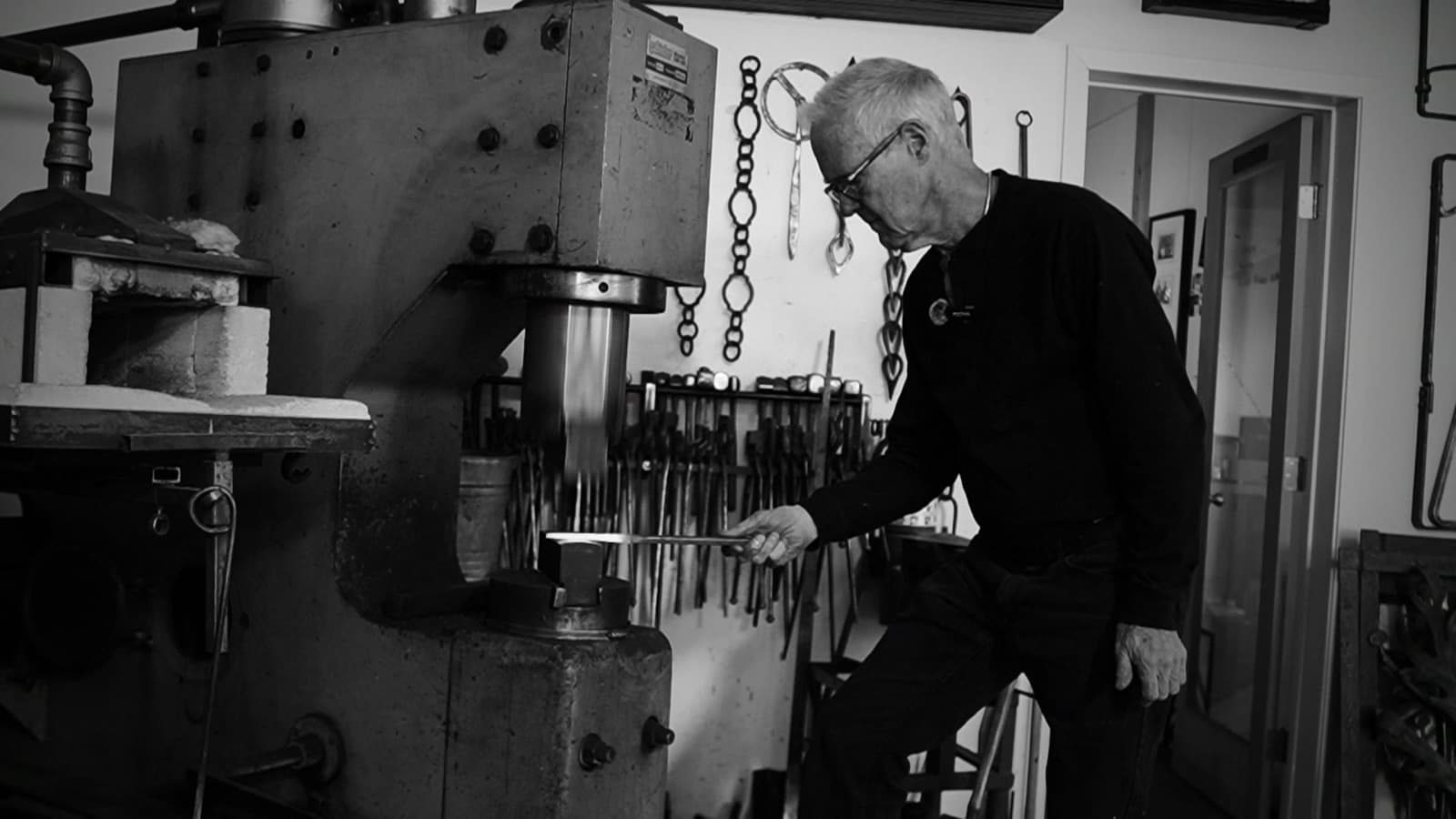
A reliable blacksmith salary is hard to state as one number because no dedicated federal occupation code exists for the trade. Blacksmiths fall under the U.S. catch-all code for Metal Workers and Plastic Workers, All Other, with a median of $45,950. Real pay ranges much wider: entry architectural shop work starts near $28 an hour, union ornamental ironwork clears $60,000, and full-time farriers average $119,770, while independent studio smiths earn on commission.
Why blacksmith salary numbers are unreliable
The federal government does not measure blacksmiths directly. The Bureau of Labor Statistics tracks hundreds of occupations, yet none of them carries the title blacksmith. The trade instead lands in ONET code 51-4199.00, a residual category the system defines as covering occupations "with a wide range of characteristics which do not fit into one of the detailed ONET-SOC occupations". That same code reports a median wage of $45,950, about 20,400 workers nationally, and roughly 1,700 openings a year in a slowly declining occupation.
Because the trade sends no clean signal into federal data, commercial salary sites fill the vacuum with numbers that rarely agree. A single search in 2026 returns a ZipRecruiter average near $44,000, a Salary.com figure around $62,799, and a Glassdoor number as high as $76,564 for the same two-word job title. Note: a spread that wide, drawn largely from self-reported entries and thin samples, describes the aggregators' methods more than it describes what working smiths take home.
The steadier anchors are occupational codes, wages posted by named employers, and published union scale. Unlike a scraped average, each of those can be traced to a document. The rest of this piece is built from them, and it treats the $45,950 catch-all figure as one honest employed-work median rather than the whole story.
Blacksmith salary by path: five ways the work gets paid
Blacksmithing pays differently depending on which version of the trade a person practices. A production smith on a shop payroll, an architectural ironworker on union scale, a farrier under horses, an independent studio smith selling commissions, and a bench-metal specialist in a jewelry house all draw from separate economies. Blacksmithing sits where every artisan trade does, at the center of the Venn diagram between fine arts and skilled trades, and the numbers split along that seam: ornamental commissions earn like art while shop shifts earn like a trade, as our definition of an artisan trade lays out.
| Path | Median Pay (2026) | Figure type and source |
|---|---|---|
| Employed shop / production smith | $45,950 | Employed-work median, O*NET 51-4199.00 |
| Architectural / ornamental | $62,780 | Employed-work median, O*NET 47-2221; union scale $33.55–$40.75/hr |
| Farrier (full-time) | $119,770 | Survey average; part-time averages $26,194 |
| Independent studio smith | No published median | Depends on the work mix |
| Bench-metal adjacent (jewelry) | $52,540 median | O*NET 51-9071.00, jewelers |
Employed and production work. A smith drawing a regular paycheck sits closest to that $45,950 median. Architectural forges post fabricator openings on ABANA's job board, and the pattern in those postings is consistent: several years of forging experience plus MIG and TIG welding, production skills asked for beside hand skills. Industrial forging pays for stability rather than artistry, and Scot Forge, an employee-owned open-die forging company, guarantees every full-time employee a 40-hour paycheck regardless of production swings. For comparison, the nearest heavy-metal trades with their own codes pay more, with structural iron and steel workers at a $62,700 median and sheet metal workers at $60,850.
Architectural and ornamental. Ornamental work, the gates and railings and stair rails that define the high end of forged metal, tracks with the ironworker trades. O*NET puts structural and ornamental iron work at a $62,780 median, and union locals publish exact scale: Knoxville's Local 384 sets journeyman pay at $33.55 an hour, Cincinnati-area Local 44 steps its ornamental rate to $39.97 by mid-2026, and Albany's Local 12 reaches $40.75 an hour before a fringe package worth roughly $28 an hour more. Trade groups on this side of the craft tend to publish craft standards rather than pay data, and NOMMA, the ornamental-metal association founded in 1958, publishes no wage survey on its site.
Farriers. Farriers occupy a distinct corner of the answer, which matters for anyone comparing a farrier versus a blacksmith salary. Horseshoeing grew out of blacksmithing and still uses the forge, though it is now its own specialty, and it reports the highest headline number in the trade. Full-time farriers averaged $119,770 in gross income in the most recent American Farriers Journal survey, against $26,194 for part-timers. Note: that figure is gross, before heavy overhead. The same survey finds the average full-time farrier spends about $21,683 a year on footcare supplies, close to 17% of income, before the truck, the tools, and the driving between barns.
Independent studio smiths. An independent smith has no median because the income is assembled rather than paid. Custom knifemaking shows the shape of it clearly, where blades sell for four figures apiece yet fewer than 2% of knifemakers work at it full time, a pattern we detailed in the artisan trade salaries breakdown. A rare few scale, and Montana Knife Company grew from a two-car garage in 2020 into a 50,000-square-foot Missoula plant projected to add more than 150 jobs. Most studio smiths instead earn what their commission mix supports, a subject the final section takes up.
Bench-metal adjacent. The nearest steady-paycheck cousins to the anvil trade sit at the jeweler's bench rather than the forge. These are jeweler roles, not blacksmithing, but the hand skills overlap — precision filing, soldering, finishing — and the federal numbers for them are stronger than the smithing catch-all: jewelers post a $52,540 median and watch and clock repairers $67,230. For a smith who wants bench income between commissions, bench jewelry and metalwork roles are the closest adjacent market.
How location and specialty move the number
Where a smith works can shift the same job title by tens of thousands of dollars, and not always in the direction people expect. Within New York State, the Albany-Schenectady-Troy region posts a $74,050 median for the metal-workers catch-all code while the New York-Newark-Jersey City metro posts just $33,790. The capital region out-earns the big city, which undercuts the reflex to chase metropolitan wages. California and Pennsylvania run the more familiar pattern, with San Francisco at $60,430 against Fresno's $43,570 and Philadelphia at $50,070 against Harrisburg's $38,740.
Nominal pay also has to be read against local costs. Brookings finds that for every $1,000 of additional earnings, an area's cost of living runs about one percentage point higher, so a higher headline wage in an expensive metro can buy less than a smaller one elsewhere.
Specialty clusters matter as much as geography. Bladesmithing has been concentrating in Montana around operations like Montana Knife Company, while the Pacific Northwest remains the country's glassblowing center, anchored by Pilchuck Glass School near Stanwood, Washington since 1971. Historic architectural ironwork keeps demand alive in cities with the building stock to match, among them Charleston, where the late Philip Simmons earned a National Heritage Fellowship for ornamental ironwork, New Orleans, and San Francisco, where architectural blacksmith Jefferson Mack — a guest on our sister show, The Trades Show — forges commissioned railings, gates, and hardware for the city's historic building stock. Working smiths follow the craft cluster as much as the cost-of-living map.
Can you make a living blacksmithing?
A person can make a living at the forge, though rarely from a single stream of work, and almost always by earning the right to the better-paying commissions first. The architectural blacksmith Nol Putnam described the arc plainly: "I paid years of dues with hooks, hardware, chandeliers, fairs, galleries, and even some wholesale work. Today, I have come full cycle, and once again I work alone on architectural commissions". He quoted a mentor's rule for the trade's early economics: "As a beginning smith, I would spend 80% of my time learning the craft and 20% of my time selling. Once I had mastered the craft, the figures would be reversed".
That concentration still holds, as blacksmith Celeste Flores of Clay and Steel reports that "probably about 90% of my revenue comes from creating railings and occasionally gates", with small gift items amounting to pocket change she would need to sell hundreds of a month to notice. The big pieces carry their own weight in hours, and Charleston's Robert Thomas has described a single city-block fencing commission that took more than 100 hours of design sketches and over a year to finish. Small-goods selling rarely adds up on its own, a lesson the wider crafts economy repeats, as our look at Etsy's seller math laid out.
The training path pays little at the start. The Maine Blacksmiths Guild structures its apprentice program as largely unpaid, adding a stipend that ranges from $50 a day for a first-year apprentice to $150 a day for a fourth-year one once the same work runs three consecutive days. That economics is why so many aspiring smiths learn through paid workshops and guild programs rather than salaried apprenticeships, and why the both-and instinct helps. The trade rewards smiths who pair the forge with modern skills, as forge-shop postings routinely ask for MIG and TIG welding beside hand forging, and Montana Knife Company scaled by joining old bladesmithing to contemporary manufacturing. Demand is real on the preservation side, where restoration and historic-trades groups estimate the country needs roughly 100,000 more skilled workers this decade, the kind of steady, undervalued repair and conservation work that sits inside the trade story rather than beside it.
For artisans weighing the trade as work rather than hobby, the practical next step is to watch where the paid roles actually surface. The Corral's job board carries metalwork and jewelry listings, and a free job alert sends new metalwork roles as they post. Makers earlier in the path can inquire about open apprenticeships or look to residencies, fellowships, and grants to fund studio time, and the artisan map shows where working shops cluster. For a companion deep-dive on a related trade, our piece on what a cordwainer is traces the same repair-versus-new-work split that shapes economics across the crafts.
Frequently asked questions
How much do blacksmiths make?
Most employed blacksmiths fall under the federal catch-all code for metal workers, which reports a median wage of $45,950 in 2026. Pay ranges far wider in practice: union ornamental ironworkers clear $60,000, full-time farriers average $119,770 in gross income, and studio smiths depend on their commission mix, with railings and gates carrying most of the revenue.
Do farriers make more than blacksmiths?
On headline income they do. Full-time farriers averaged $119,770 in gross income in the most recent American Farriers Journal survey, well above the $45,950 median for the metal-workers code that captures most blacksmiths. The comparison is uneven, though. Farrier income is gross, before an average $21,683 a year in supplies plus truck and travel costs, and part-time farriers averaged $26,194.
Can you make a living as a blacksmith?
Yes, though rarely from one income stream. Working smiths typically assemble a living from architectural commissions, repair, teaching, and small-goods sales, with the larger railings and gates carrying most of the revenue. One blacksmith reports that roughly 90% of her income comes from railings and gates. The path usually starts with low-paid apprenticeship or paid workshops before commission work becomes steady.
Why isn't there a federal blacksmith salary?
The U.S. Bureau of Labor Statistics has no dedicated occupation code for blacksmiths. The trade is folded into O*NET code 51-4199.00, a residual bucket for metal workers who do not fit a detailed category, which reports a $45,950 median. Because that code blends many jobs, its figure is a rough proxy rather than a true blacksmith wage, which is why named-employer and union data are more reliable.