
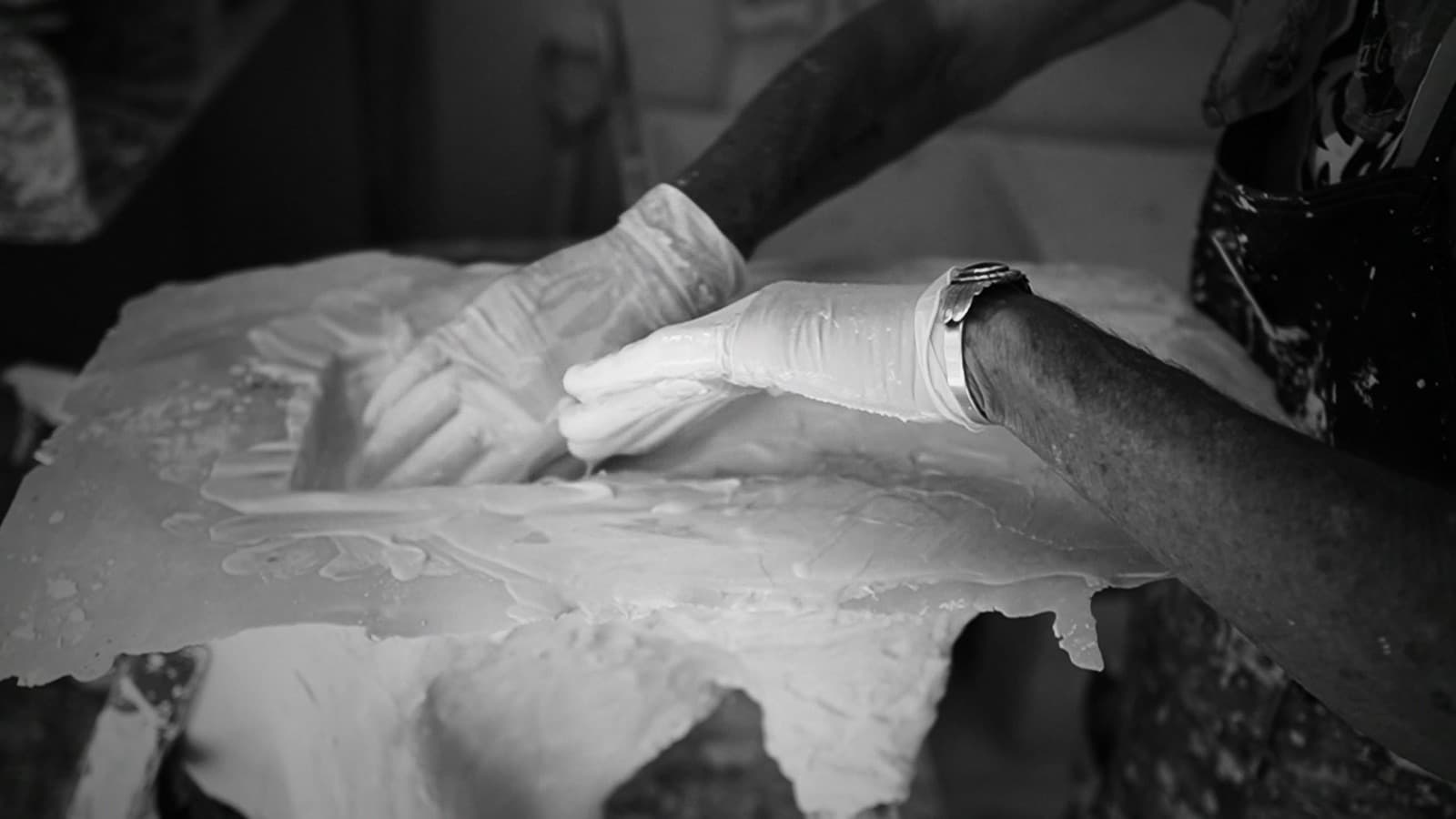
Restoration vs conservation names two overlapping ways of caring for cultural objects, and the professional line is narrower than everyday usage suggests. Conservation is the broader profession devoted to preserving cultural property, spanning examination, documentation, treatment, and preventive care. Restoration is one treatment within that work: returning an object to a known or assumed state, often by adding nonoriginal material. A conservator follows a binding ethical code, and restoration is a mode of that practice, not a rival discipline.
The artisan trades that this work belongs to, furniture makers and object restorers and conservators among them, sit at the center of the Venn diagram between fine arts and skilled trades, carrying the artistry and aesthetic of fine arts plus the training and rigor of the skilled trades (more on that in what is an artisan trade). The restoration-versus-conservation question sits right on that axis, because it turns on aesthetic judgment and technical ethics at once.
Restoration vs conservation at a glance
The two approaches share a goal but diverge on ethics, documentation, training, and who does the hiring.
| Dimension | Conservation | Restoration |
|---|---|---|
| Primary goal | Preserve cultural property for the future; minimize deterioration and retain informational content | Return an object to a known or assumed state, often by adding nonoriginal material |
| Core ethic | Reversibility and minimal intervention; nonintervention is permitted | Bound by the same ethics inside institutions; more latitude in private practice (refinishing, replacement) |
| Documentation | Dated written and pictorial records, with copies given to the owner | Varies; lighter and per-project in independent shops |
| Training | Two-to-four-year graduate degree plus a pre-program apprenticeship | Trades apprenticeship or program; no single required credential |
| Typical employer | Museums, institutions, and conservation labs | Self-employed, auction houses, and private collectors |
| Median Pay (2026) | $51,440 (employed median; 10th–90th $30,730–$84,400) | $44,540 (employed median, furniture finishers) |
Note: The public often uses "restoration" loosely, for cars, houses, or furniture businesses that fully refinish, while the profession, since AIC's 1996 definitions, has kept the term precise.
How the field itself defines restoration vs conservation
The American Institute for Conservation (AIC) settled this vocabulary in 1996, and its official site still publishes the identical wording. AIC defines conservation as "The profession devoted to the preservation of cultural property for the future," carried out through "examination, documentation, treatment, and preventive care." It defines restoration more narrowly as "Treatment procedures intended to return cultural property to a known or assumed state, often through the addition of nonoriginal material." Under that framing, restoration is one possible treatment within conservation, not a competing craft.
The same nesting holds internationally. ICOM-CC's 2008 terminology resolution treats conservation as the umbrella and restricts restoration to actions "directly applied to a single and stable item." Because an actively deteriorating object must first be stabilized, restoration sits downstream of conservation rather than substituting for it.
The definitions are settled; the practical disagreements among practitioners turn on the ethics of intervention, governed by two principles: reversibility and minimal intervention. AIC's Code of Ethics, Guideline 21, states that "when nonintervention best serves to promote the preservation of the cultural property, it may be appropriate to recommend that no treatment be performed," so the professional standard explicitly permits doing nothing. Practitioners have debated the reversibility standard for decades; in her 1987 essay, conservator Barbara Appelbaum argued that reversibility is a spectrum of difficulty rather than a binary, yet she held the line on why it matters: "Reversibility is still a major criterion of good conservation treatment, one that sets conservators apart from skilled restorers or repairers" (JAIC).
Where furniture restoration and everyday repair fit
Between museum conservation and casual repair sits a large private-practice world, and furniture is its clearest example. Furniture restorers most often work self-employed, serving private collectors, auction houses, and dealers directly (Prospects). Many adopt conservation ethics without holding a museum credential. Joshua Klein of Klein Restoration in Brooklin, Maine, follows what he calls the "6-foot-6-inch rule," where a repair should be invisible from six feet away yet detectable from six inches. As he puts it, "I want to be invisible in my work except when you get 6 inches away. I'm not in the forgery business. I'm in the conservation/restoration business" (Ellsworth American).
The economics of this middle lane are modest and slightly contracting rather than expanding, as the industry data shows. The broader US furniture repair and reupholstery industry generated $2.0 billion across 18,834 highly fragmented businesses in 2026, and it has contracted at roughly a 1.1% annual rate since 2021. That industry figure explicitly excludes museum-piece restoration, which US data tracks as a separate market. Pricing in private restoration stays per-project and opaque for a practical reason, since the Conservation Center for Art & Historic Artifacts notes that treatment "will rarely cost less than $500" and that a condition report alone starts at $150, because conservators must inspect an object by hand before quoting.
Repair belongs squarely in this trade story. Furniture finishers, who refinish and repair worn and antique furniture, earn an employed median of $44,540, with about 20,500 workers and roughly 2,000 openings projected each decade. Independent restorers set per-project fees that can far exceed that employed median, which is why the finisher figure marks a floor for the trade rather than its ceiling. That number sits just below the museum technicians and conservators median discussed below, a reminder that hands-on repair and institutional conservation sit close together in pay despite very different training routes.
Restoration vs conservation career and credential paths
The two routes into this field rarely overlap. The conservation route runs through graduate school, where AIC recognizes eight North American graduate programs and admission is highly competitive. The flagship Winterthur/University of Delaware Program in Art Conservation is a three-year Master of Science with a furniture specialization and a full third year spent in supervised internship, and applicants must already have logged 400 hours of documented conservation experience before applying. SUNY Buffalo State has graduated more than 500 conservators and states that nearly all remain in the profession. These paths feed museum and institutional roles, where museum technicians and conservators earn an employed median of $51,440, ranging from $30,730 to $84,400 across the 10th to 90th percentiles. That $84,400 is the 90th percentile of employed roles, not the field ceiling; senior conservators, private-practice specialists, and lab directors can earn beyond it.
However, there is another way in through the building and preservation trades, and it does not require a graduate degree. North Bennet Street School's two-year Preservation Carpentry program reported 91% of its 2024 cohort and 100% of its 2023 cohort employed in the field, placing graduates with the National Park Service and Historic New England. The American College of the Building Arts in Charleston offers a four-year Bachelor of Applied Science across six building-arts specializations, including blacksmithing and architectural stone carving. The NPS Traditional Trades Advancement Program runs a 26-week paid internship, where participants are employed through a youth-corps partner rather than NPS directly, at $1,440 bi-weekly in 2026, on real projects like historic window repair and masonry pointing, and completion confers Public Lands Corps hiring authority for federal work.
If either route appeals, you can inquire about open apprenticeships or track residencies, fellowships, and grants on the opportunities board. For how these medians compare across the six in-scope trades, see the artisan trade salary guide.
Frequently asked questions
What is the difference between restoration and conservation?
Conservation is the broad profession of preserving cultural property, covering examination, documentation, preventive care, and treatment. Restoration is one treatment within it: returning an object to a known or assumed state, often by adding nonoriginal material. Per the American Institute for Conservation, restoration is a subset of conservation work rather than its opposite, and reversibility is the ethic that most distinguishes conservators from repairers.
What is a conservator?
A conservator is a professional whose primary occupation is conservation and who, through graduate training and supervised experience, carries out examination, documentation, treatment, and preventive care under an ethical code. Most hold a two-to-four-year graduate degree in conservation. In the US, museum technicians and conservators earn an employed median of $51,440, ranging from $30,730 to $84,400 across the 10th to 90th percentiles.
Is furniture restoration a good career?
Furniture restoration can be a viable career, though the economics are modest and mostly self-employed. Furniture finishers earn an employed median of $44,540, and the broader furniture repair industry has contracted at roughly 1.1% a year since 2021 (IBISWorld). Success usually depends on building referral relationships with dealers, designers, and collectors, and treatment work rarely prices below $500 per project.
What degree do you need to become an art conservator?
Most practicing art conservators hold a graduate degree, typically a two-to-four-year master's in conservation from one of eight recognized North American programs. Admission is competitive and usually requires 200 to 400 documented hours of supervised pre-program experience. The Winterthur/University of Delaware program, for example, is a three-year Master of Science requiring 400 hours before applying.
Find restoration and conservation work on The Corral
The Corral lists jobs across restoration and conservation. Browse the open restoration and conservation listings, and if you practice in any of the six trades, claim your Artisan Map profile so collectors, dealers, and institutions can find you.