
A letter from the founder about how this platform uses AI.
If we have yet to be introduced, my name is Briana Ottoboni. I live in San Francisco, in what feels like the AI capital of the world. And my work revolves around traditional artisanship. These are two industries that exist in polarity. One driven by machine, the other innately and irrevocably human. But in both, there are distinct types of intelligence and instead of exploring the tension between them, I want to explore the relationship.
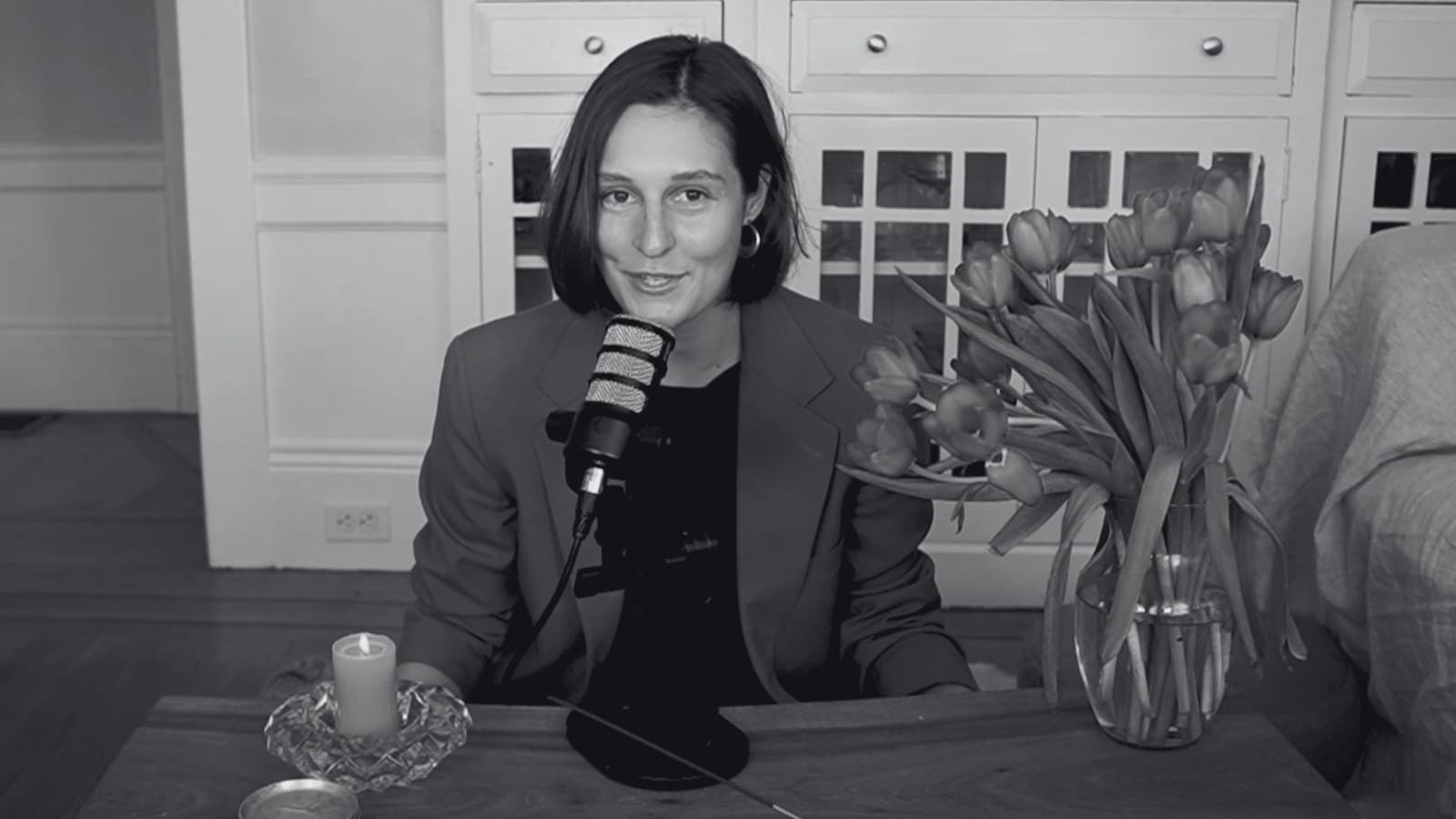
I am the host and creator of The Trades Show, a conversation series where I have the privilege of sitting down with artisans — think blacksmiths, shoemakers, and ceramicists — in their workshops. I am also the Founder of The Corral, a platform that connects artisans with opportunities to build the next generation of craftworkers.
In this letter, I will share my philosophy for how I use AI in my work.
But before I do that, I want to tell you how I got here. Because many parts of my story were forged from a similar tension relationship.
A story of opposites
I grew up in Silicon Valley during a time that shaped companies like Facebook, Google, Uber, and Airbnb. But I was raised in a family undefined by technology. My Nonno (Italian for grandfather), was the Chief Nursery Officer in Golden Gate Park. In the midst of San Francisco, he had a pumpkin patch in his rare double lot yard every October. I grew up foraging for Porcini mushrooms, backpacking in the Sierras, and taking oil painting classes. I remember seeing the first ad for the iPhone sitting in a living room in Lake Tahoe overlooking the forest. Being exposed to both sides, I got to learn the language of technology while experiencing the ancient wisdom of the natural world.
My parents' relationship tension exists in a parallel model of contradiction. My dad was proudly a garbage man in San Francisco ("Garbologist", he often called himself), while my mom got her PhD when I was in college and is a Nurse Scientist at Stanford. From my dad, I learned that life outside of work could be more defining than work itself. From my mom, I learned what it was to love what you do. Together, I developed the belief that your life outside work and the work you make into your life can both be just as rich.
Fast forwarding, I started my career as a product marketer, a niche role that usually carves itself out as the bridge between product teams and engineering teams. Here, I got to witness the visionaries of product and design create magic out of thin air. And I watched engineers figure out how to put all of the pieces together. It was my job to translate the ideas into building blocks.
This concept of the junction between two seemingly opposing worlds is familiar to me because it's where I came from.
Finding my very own ecotone
I found my own two seemingly opposing worlds by following curiosities that eventually found their middle ground.
I fell in love with the artisan trades after bringing a pair of shoes to a cobbler and realizing two things at once: what artistry was involved in reviving a pair of loafers, but also what would happen when we lost the current generation of cobblers with no infrastructure to build the next. The Trades Show was born from this. I put my marketing chops to good use by interviewing the artisans keeping these crafts alive.
And while I wouldn't say I fell in love with AI the way I fell in love with shoe cobbling, I fell into fascination at the very least. I started playing with it, mostly driven by a curiosity to understand it. My time translating to engineers meant I knew the language of APIs and Github repos enough to grasp the building blocks of this new technology.
And then one day, about the same time AI tools like Lovable were coming online and opening up a world of possibilities to non-technical people (like myself), I wondered why an artisan jobs board didn't exist and how I could build one myself. It started as an experiment to see what was possible with AI and how I could expand my work with artisan trades beyond storytelling, because storytelling alone wasn't enough to revive an industry. It turned into the work I want to make my life.
The Corral, unknowingly at the time, became the blurred line between craftsmanship and technology.
Hopefully, by now it doesn't seem so foreign that I would end up here: one foot in a world where everything is made by human hands, and the other in a world that is pushing machines to the edge beyond human capability.
The worlds are so completely different that they have somehow become intertwined, like running to the opposite edges of the world and realizing the earth is round. In my brain, they have developed an interdependence that is vital to their survival.
And it turns out, this idea is backed by science. It's called "the edge effect". In ecology, this is a phenomenon that describes why some of the richest and most fertile environments occur at the edges of two different landscapes — where a forest meets a meadow or a river meets the ocean. It is in these transitional spaces, also called ecotones, where you'll find the most life. The wildlife and vegetation from both sides can coexist here together because the environment holds all of the properties that make both sides livable. These spaces end up with more biodiversity than either environment on its own, which inadvertently makes these ecotones the strongest.
So that is what I am here to do. To bridge the gap between craft and technology and find the ecotone between them, the part that makes both sides richer (ecologically-speaking, but hopefully literally-speaking as well). To create the space where the best parts of technology — the parts defined by innovation and accelerating humanity — meet the best parts of craft — the parts defined by what it means to be human in the first place.
I had the chance to speak on the emergence of artisanship in the age of AI at IDEA SF this past June. In my talk, I posed the question, what kind of world can we create when we use the most advanced tools we have to protect the most ancient work we do?
I believe this is the world that we're working toward.
A new idea that is actually very old
Actually, I believe it's the world we've been working towards for the past more than 250 years.
Over 250 years ago, before the first Industrial Revolution, everything was handmade because there was no other option. It was a necessity, not a luxury, to have handmade shoes.
And during that time, technology was not opposed to craft, but deeply connected to it.
The anvil — used since the beginning of time to hammer, bend, or shape hot metal — was at that time the technology that powered craft.
After all, technology is simply a tool.
Since then, we've been continuing to advance these tools to make our lives easier, "better".
We've been optimizing for convenience, which eventually became efficiency, which eventually became profit. In isolation, none of these things are inherently bad. In fact, the luxuries of each of them are all around us. Convenience is being able to Doordash when you are home sick. Efficiency is being able to run a script on a spreadsheet to save you hours of menial work. Profit is being able to operate a self-sustaining business that in turn affords you the opportunity to reinvest in the things that matter to you.
It's not that optimizing is inherently bad. It's that we've been optimizing for the wrong thing.
We've been optimizing work for outputs above all else.
And now, more than 250 years later, optimizing for outputs has allowed us to successfully develop the technology to make craftwork obsolete if we wanted to.
If we wanted to, we could never see a pair of handmade shoes ever again. Theoretically, we don't have to. We have factories and machines that can make shoes for us. You don't even need to get your old shoes repaired if you don't want to. You can probably buy a pair of shoes online for the same cost as the repair itself. I'm sure AI will learn how to make shoes in a few years, anyway. We can already buy AI dogs.
But just because we can, doesn't mean we should or that we even want to.
What are we optimizing for
It's a little like we ran a race, finished first, but there's no one at the finish line. We did it! But surprise, we took a wrong turn and ended up 500 miles off course. So what exactly did we win?
I'll tell you. In optimizing for outputs, we've learned that the outputs don't matter as much as we thought they would.
We've learned that what matters is the stuff that is deeply, irrevocably human. And with a non-human point of comparison for the first time, we've actually had to sort out what that stuff is made of.
It turns out that all of the parts that feel intangibly human live in the process.
The creativity, the connection, the experience, the history — they are all embedded into the process of making. It's the process that gets us to the end result.
It's why there is an indescribable quality that separates human-made from machine-made. It's why we can so often spot something written by AI. It's why a pair of boots made on an assembly line will never compare to a pair made by hand (or even repaired by hand). Did you know that making a pair of bespoke cowboy boots takes over 372 steps? Machines skip over the most important part.
It's why optimizing for the output has left us feeling like something is missing. Because it is.
What's missing is what makes us human.
I have a handmade ceramic cup in my cabinet. It was made by MaryMar Keenan, a talented ceramicist and one of my first ever interviews on The Trades Show. Every time I make myself a cappuccino in it (it's the perfect size), I think of MaryMar and our interview and how she said it took her 30 years to make it, to not only develop the skill and creative vision it required, but to become the person who was ready to bring that cup into the world. There is even a perfect little indent for my thumb, which is a dead giveaway that it was made by a human, because only a human being would know that was a necessary detail.
When I hold it in my hand (it fits perfectly), I can see why at one time we thought the cup itself was the point.
Only now that we have all of the technology at our disposal to make this handwork absolutely unnecessary do we learn its true value.
To finally know what we should be optimizing for — that is what we won.
I am optimizing for craftsmanship.
Because craftsmanship exists as much in the process as it does in the end result as it does in the maker themselves. It exists in the generations of wisdom that have come before, in the histories that made the product come to be, in all of the people that were part of the stories.
My AI philosophy
My philosophy on how I use AI in my work is as simple as that: I am optimizing for craftsmanship.
To optimize for craftsmanship does not mean that I will abandon technology, but it means I know its place — and its importance. Whatever we optimize for becomes the north star, the thing that we uphold above all else.
So in my work, in The Trades Show, The Corral, and whatever comes next, I will optimize for craftsmanship above all else.
That means that I will NOT use AI where craftsmanship is involved, for that is the thing I am precious about protecting.
That means I will use AI to support a lot of the menial work.
And if it wasn't clear, my work in this beyond special ecotone means the world to me. So I also promise to be transparent about this. If you are ever left wondering if something was the work of AI or my very own human magic, ask me.
For a detailed list of where I do and do not use AI in my work, see here.
Success stories of craft and technology
And let's also be clear that I am not the first, nor will I be the last (hopefully!!) to use technology to support craftsmanship.
Bob Buckter, architectural colorist and the man responsible for the Painted Ladies, hired a software developer in 1990 to build him a custom program where he maintains records of every one of the jobs he's done for the past 30+ years.
Frank Beneduci, American bootmaker, talks about a machine that helps him last a pair of shoes in 7 seconds, but would save his back in the process.
Amanda Luu, Ikebana student and florist behind renowned floral design studio Studio Mondine, has a dataset with the recipe for every floral arrangement she's ever developed.
This is optimizing for craftsmanship: using technology to uplift the product, the process, and the maker above all else.
Because Bob's reputation, the reason he has completed over 25,000 painting jobs in his career, is safeguarded if he can call upon the exact colors he used on a house in 1991.
Because Frank, who came to shoemaking as a second career, needs to rely on machines so he can make American-style boots for the rest of his life.
Because Amanda's creative genius, a determining factor for her industry role as the florist's florist and features in Vogue Weddings, is now codified in a dataset because florals are first and foremost a logistics business.
What kind of world can we create?
What kind of world can we create when we optimize for Craftsmanship?
My hope is that it's one where the machines are helping us be the most human we can be.
One where in the AI capital of the world, you are just as likely to find someone who is a shoemaker as you are to find someone who is a tech founder.
Or one where the startup founder apprentices as a leather artisan on the side.
Or one where a ceramicist is raising her first round of funding.
One where we have created the richest environment imaginable because we have found the edge of two seemingly opposing ideas so that something new thrives.
This was perhaps more than you bargained for when you asked about my philosophy on how I use AI in my work, but I hope it gave you insight on why this work is important to me to begin with, and why I will protect it at all costs.
Now, enough about me! I want to know what you are optimizing for. And what kind of world we can create when you do.
How AI is used on The Corral
On the left are the parts of the work that AI supports. On the right are the things that will always be human.
| What AI does | What stays human |
|---|---|
| Sources incredible artisans | Hosting the interviews (always & forever human!) |
| Transcribes intro calls with guests | Filming the interview, B-roll, and any other content |
| Organizes video and creative assets | Visual editing on the video |
| Maintains artisan, sales, and sponsorship pipelines | Owning brand and creative direction |
| Supports video editing in post-production (cutting filler words, etc.) | Visioning and designing user experience and UI |
| Clipping social content from long-form videos | Writing and sending all emails (everything in your inbox is directly from my brain!) |
| Schedules social posts | Deciding on all guests, partners, and contacts |
| Analyzing performance metrics | Reviewing blog posts |
| SEO strategy and implementation (including blog drafts) | Reviewing all jobs and opportunities before they're live |
| Automates job and opportunity sourcing | |
| Supports design work by organizing files, executing variations, etc. |
If you are ever unsure which side something falls on, ask me.